PCT出願を後欧州移行する場合、英訳が必要になります。この際、翻訳に誤りがあったとしても、日本語原文が正しければ、後から誤訳を訂正すればよいと考えている方も多いのではないでしょうか。
実際、Art. 14(2) EPCでは、欧州特許庁における手続中、翻訳文を出願時の原文に一致させることが認められています。
しかし、この誤訳の訂正には恐ろしい落とし穴があります。特許付与後に誤訳が発覚した場合、たとえ日本語原文に基づく正しい翻訳への訂正であっても、訂正できないことがあるからです。
今回は、日本語PCT出願の英訳における誤訳が原因で、いわゆる「Inescapable trap(逃れられない罠)」に陥った審決T 0385/23を紹介します。
背景
日本語PCT出願における原クレーム1:
…
前記培養室内を加熱するべく、前記内箱の裏面、及び前記断熱扉の前記開口に向かう内壁面の裏面に設けられるヒータと、
…
を有して構成される培養装置。
EPOにおける登録クレーム1:
A heat insulating casing (2) including …
one or more heaters (28) provided to one or more inner surfaces of the inner case and an inner wall surface of the heat-insulated door (3) and configured to heat the culture space (6), …
メモ
日本語クレーム1における「裏面」は「rear surface」と英訳されるべきでしたが、登録クレーム1では誤って「inner surface(内面)」と英訳されていました。その結果、欧州特許庁の審判部は日本語原文に開示されているのはヒーターをケースの「裏面」に設ける構成であり、英訳された「内面」に設ける構成は原文の開示範囲を超えると判断しました。
論点
登録クレーム1における「inner surface(内面)」を「rear surface(裏面)」に変更することは許されるか?
審判部の結論
「inner surfaces(内面)」を「rear surfaces(裏面)」に変更する補正は権利範囲を拡大するため、許されない(Art. 123(3) EPC違反)。さらに「inner surfaces(内面)」をそのままにすることもArt. 123(2) EPCに違反し許されない(Inescapable trap)。
審決文の抜粋
2.5 The amendments made to the patent as granted extend the scope of protection.
The amendments made to claim 1 of the main request compared to claim 1 as granted, are as follows (emphasis added): “one or more heaters (28) provided to one or more [deleted: inner] rear surfaces of the inner case and a rear surface of an inner wall surface of the heat-insulated door”. Similar amendments are made to dependent claims 2 and 3.
These amendments extend the protection of the patent since the location of the heaters is, where amended, inverted from the inner to the outer surface of the case and the door, thus creating an aliud. This is explained in the following paragraphs.
和訳:
2.5 登録特許に対して行われた補正は、特許の保護範囲を拡張するものである。
登録時の請求項1と比較して、主請求(Main Request)の請求項1に行われた補正は、以下のとおりである(強調は追加されたもの)。
「インナーケースの1つ以上の内面裏面、および断熱扉の内壁面の裏面に設けられ、培養空間を加熱する1つ以上のヒーター(28)」
従属請求項2および3についても、同様の補正が行われている。
これらの補正は、特許の保護範囲を拡張するものである。なぜなら、補正された箇所では、ヒーターの設置位置がケースおよび扉の内面から外面へと反転しており、その結果、異なる技術的対象(aliud) が生じることになるからである。
3.2 In auxiliary requests 3 to 5, claims 1 to 3 were amended by re-introducing the wording “inner surface of the inner case” in accordance with the wording of the patent as granted.
However, the issue under Article 123(3) EPC concerning the main request cannot be resolved by way of amendment without violating the requirements of Article 123(2) EPC. The amended wording of auxiliary requests 3 to 5 has no basis in the authentic text of the application as filed (see translation D22).
However, the issue under Article 123(3) EPC concerning the main request cannot be resolved by way of amendment without violating the requirements of Article 123(2) EPC.
和訳:
3.2 補助請求3~5では、請求項1~3について、登録特許の文言に従い、「インナーケースの内面(inner surface of the inner case)」という表現を再導入する補正が行われた。
しかしながら、主請求(Main Request)に関するArt. 123(3) EPCの問題は、Art. 123(2) EPCの要件に違反することなく、補正によって解消することはできない。
補助請求3~5において補正された文言には、出願時の真正な原文に根拠が存在しない(翻訳文D22参照)。
解説
この審決からも明らかなようにPCT出願の英訳作成時に誤訳が混入し、その誤訳が混入したままで登録になってしまうと、異議過程において特許の取消しが確実になるInescapable trapという状況に追い込まれるリスクがあります。
このためPCT出願の欧州移行用の英訳を作成する際には、特にクレームの英訳において誤訳が混入しないように注意する必要があります。
ちなみにClaudeに「EP3418372A1.pdfがWO2017169850A1.pdfの特許翻訳として正確な英訳となっているかチェックしてください」とのプロンプトで翻訳チェックを依頼してみたところ、ちゃんと「inner surface(内面)」の誤訳を発見してくれました。
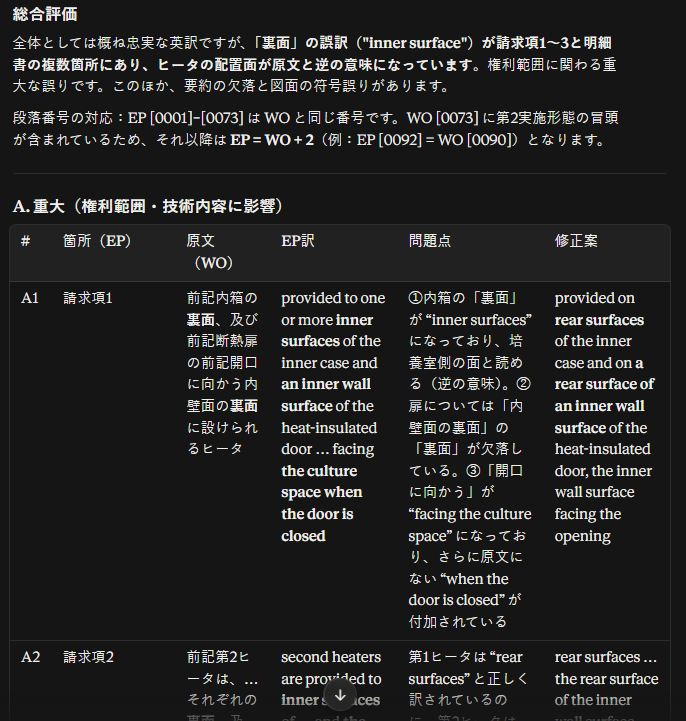
人間のチェックだけでは誤訳を減らすことに限界があること、そして今後は異議申立人側も生成AIを活用して異議理由を調査するようになることを考慮すると、今後特許業務に生成AIを一切用いないことは逆にリスクになると思われます。